
Museum of Contemporary Art, Skopje, North Macedonia
28.11.2026 - 21.03.2027
Artists and authors: Mauricio Gatti, Elene Glonti, Krsto Gligorjadis, Klelija Živković, Osama Zatar, Hristina Ivanoska, Gjorgje Jovanovik, Roman Selim Khereddine, Gal Kirn, Izabela Levenska Miljanić, Nemanja Milenković, Ahmet Öğüt, Abi Palmer, Ilija Prokopiev, Kikuya Satoshi, Cheng Xinhao, Olja Triaška Stefanović, Maria Tsagkari, Yane Calovski
Curators: Mira Gakjina (IKT Member) and Jovanka Popova (IKT Member)
The exhibition All That We Have in Common: Animals Are Not Elsewhere turns its attention to the animal world, focusing on the other species with whom we share our environments, histories, and futures, and whose lives have been systematically controlled, marginalised, exploited, or rendered invisible.
At a time of climate collapse, accelerating species extinction, and ecological degradation, care is increasingly invoked as a social value yet increasingly absent in practice. Against this backdrop, counter-anthropocentrism emerges as the exhibition’s central conceptual framework. It proposes a shift away from understanding the human as the unquestioned centre of knowledge, culture, and power, opening space for non-human lives, voices, agencies, and forms of knowledge that are nevertheless essential to the survival, justice, and sustainability of the world we collectively inhabit.
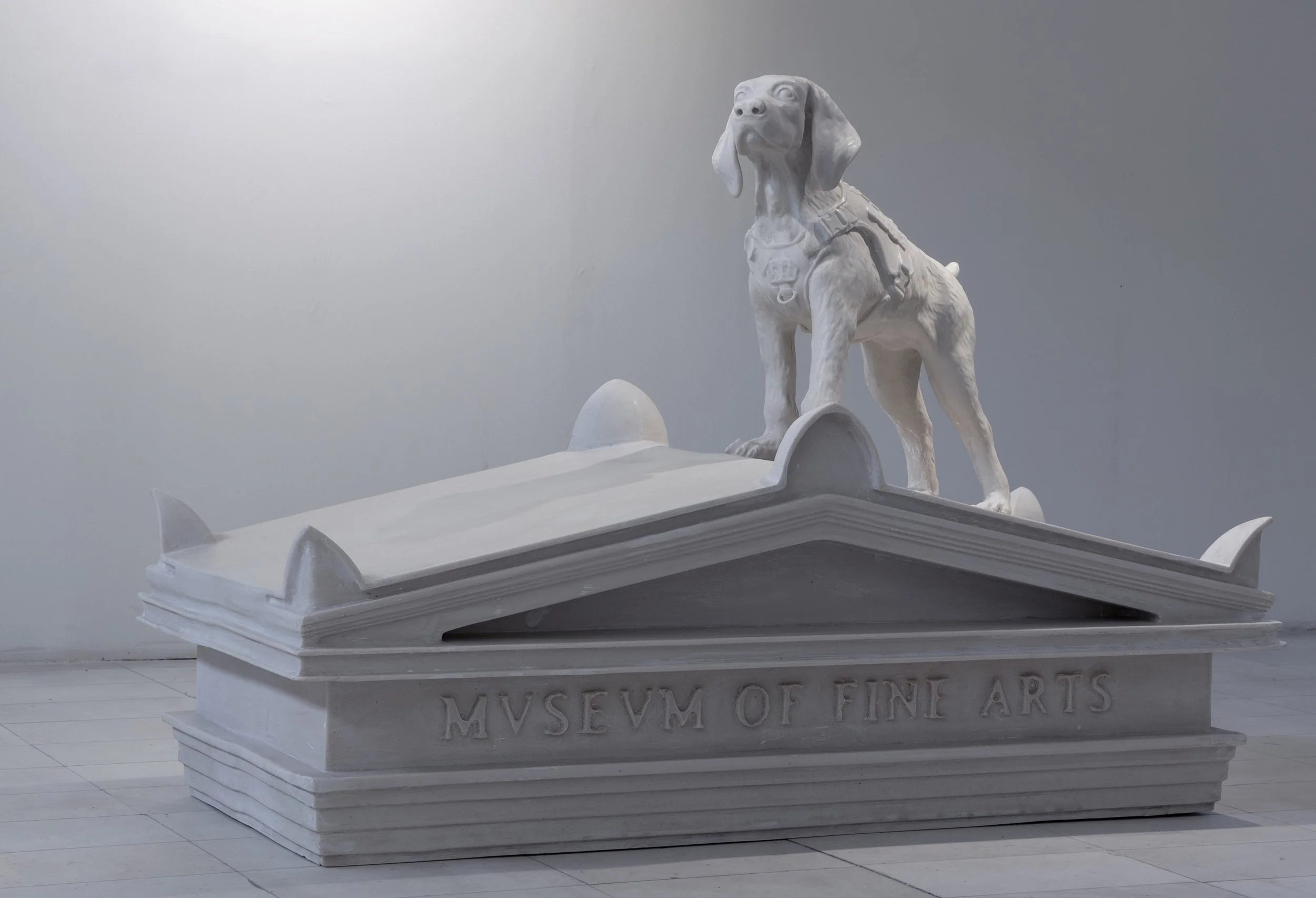
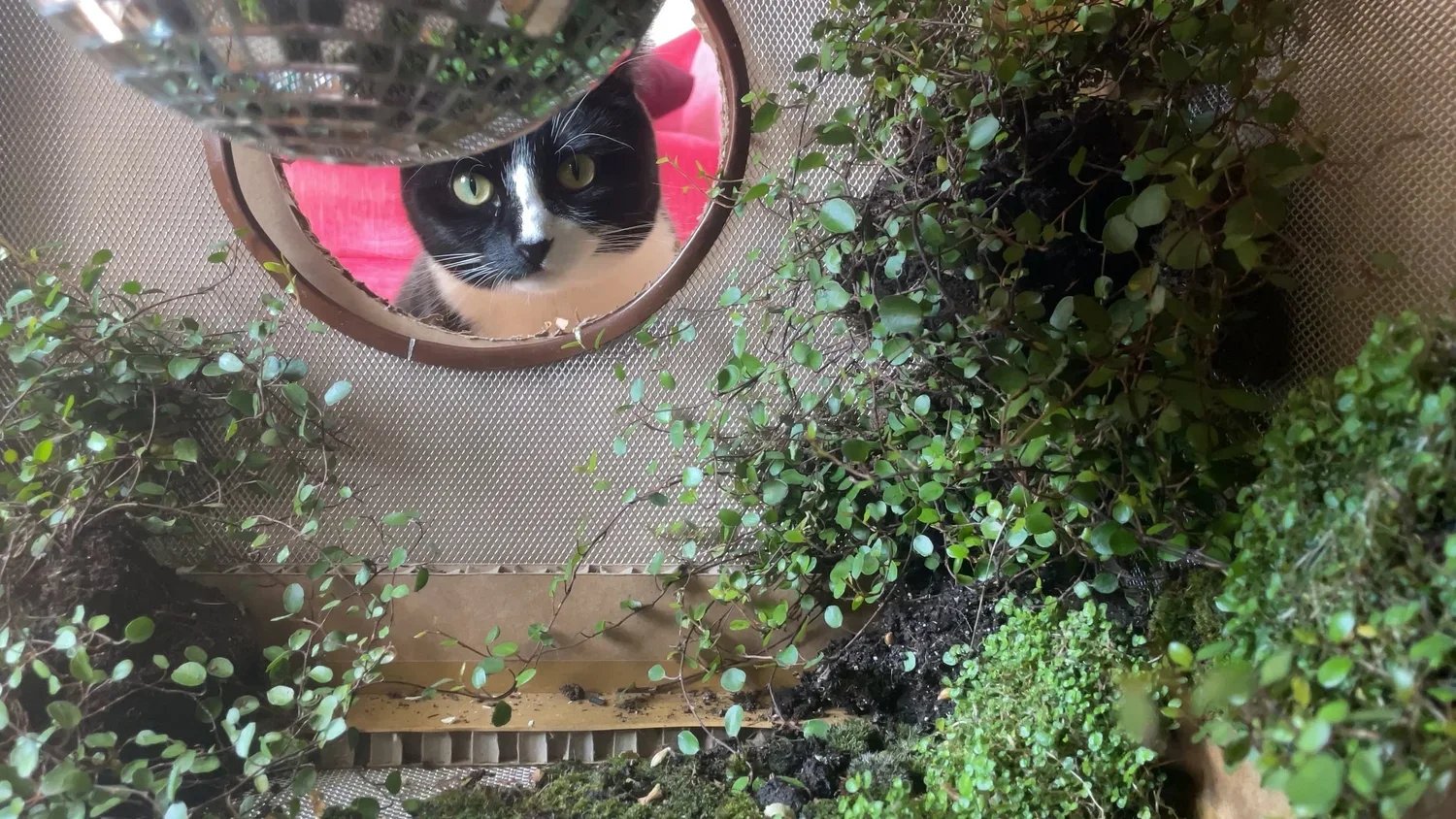
The exhibited works engage with questions of multispecies ethics, examining the violence embedded in anthropocentric systems while imagining alternative forms of living together.
They address themes such as the ethics and politics of care, non-human perception and language, animal witnessing and suffering within systems of human violence, speculative and archival forms of animal resistance, hybridity and multispecies coexistence, the decolonisation of perception, and the possibilities of solidarity across species. Through diverse artistic practices and media, the artists propose affective and political ways of imagining relationships with non-human life that move beyond the logic of domination towards reciprocity, interdependence, care, and coexistence.
In this sense, the exhibition places animals at the centre of shared ecological and political realities, recognising them as active agents with their own experiences, emotions, memory, modes of communication, cooperation, and resistance, rather than as symbols, metaphors, or aesthetic motifs.
Although the exhibition addresses urgent global concerns, it is also deeply rooted in its local context. The presence of thousands of stray dogs and other animals on the streets of Skopje and across North Macedonia reveals the contradictions in society’s relationship with the animals with whom we share our spaces. Their everyday presence raises questions that extend beyond animal welfare to encompass public responsibility, institutional care, and the ways in which we organise shared urban life.
Despite being an integral part of the urban environment, these animals are subjected to neglect, abuse, and killing. The ways in which they are treated expose not only the limits of institutional responsibility but also a broader societal tolerance of violence, the selective nature of compassion, and the unequal value assigned to different forms of life.
Alongside existing works by international artists and selected works from the Solidarity Collection of the Museum of Contemporary Art – Skopje, the exhibition will include works by artists from North Macedonia. These works emerge from direct engagement with the local conditions in which animals live and the questions arising from relationships between humans, animals, the city, institutions, and the environment.
The exhibition builds upon the long-term curatorial research project All That We Have in Common, initiated in 2018 and developed through a series of international exhibitions exploring solidarity, social justice, political imagination, and alternative forms of coexistence.