
Camargo Fellowship 2027-2028
LOOKING AHEAD, THE FUTURE OF THE CAMARGO FELLOWSHIP APPLICATION PROCESS
Please note that this year’s open call will, until further notice, be the last one open to the public. Beginning in July 2027, the Camargo Foundation will implement a new selection process that will no longer be based on a public open call.
This change is the result of a long process of collective reflection. If you are considering applying for a residency in Fall 2027 or Spring 2028, we encourage you to do so through the current open call.
THE CAMARGO FOUNDATION
Founded by American artist and philanthropist Jerome Hill (1905-1972), the Camargo Foundation fosters creativity, research, and experimentation through its international residency program for artists, scholars, and thinkers.
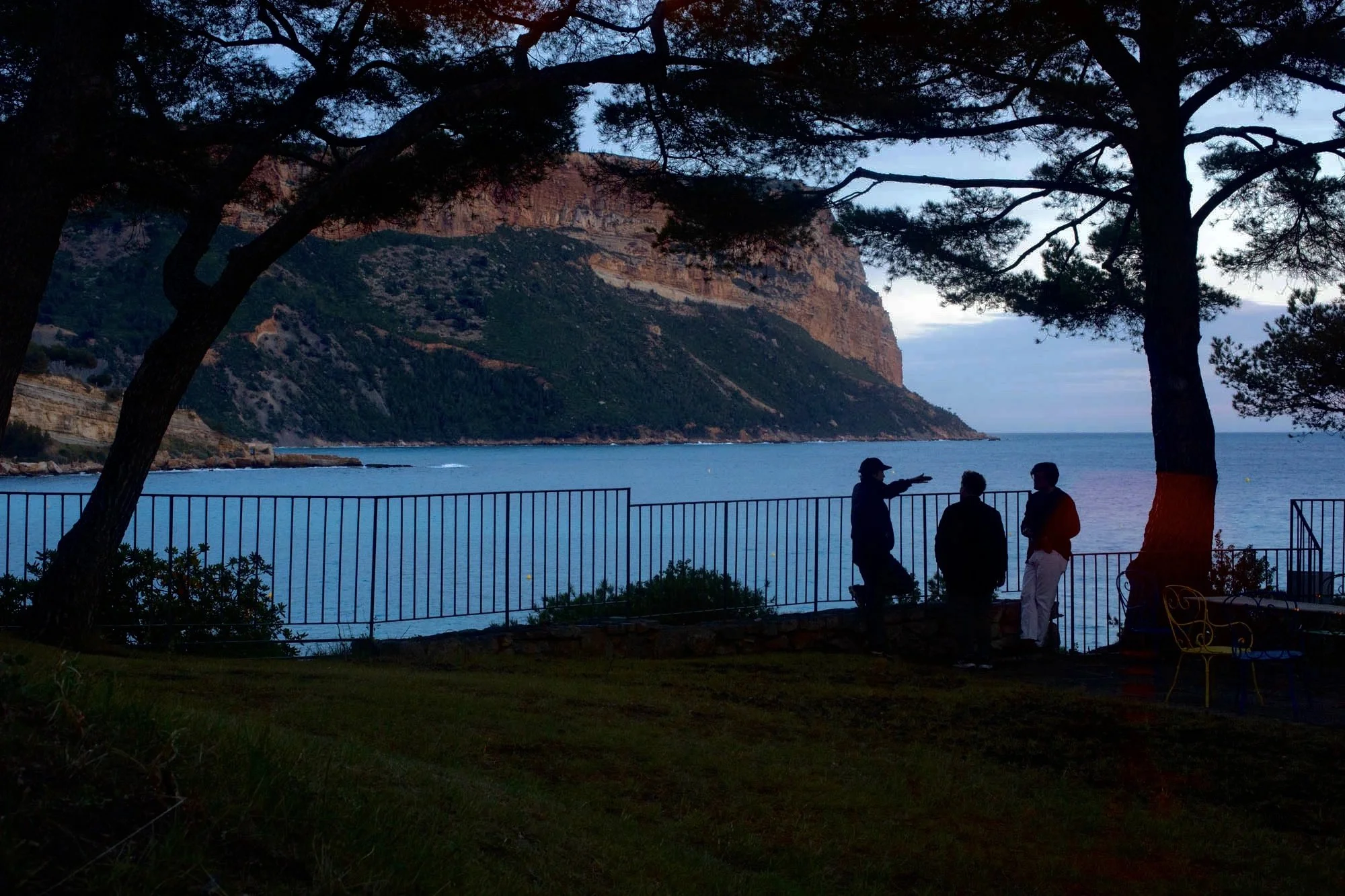
Located in Cassis, France, on the edge of the Mediterranean Sea, the Foundation offers time and space in a contemplative and supportive environment, giving residents the freedom to think, create, and connect.
The Camargo Foundation, with a history of over 50 years of support for forward-looking work in the arts and humanities, aspires to be a catalyst for innovative work and fresh understanding across divisions in a changing world.
ABOUT THE PROGRAM
The Camargo Fellowship not only provides time and space for the residents, but also initiates exchanges within the group and develops a collective spirit, which is one of the program’s distinctive features. The interactions developed among the program’s fellows are a vital element of this program.
Since 1971, the Camargo Foundation has awarded residencies to more than 1,500 individuals as part of its mission to support advanced research, experimentation, and interdisciplinary approaches in the Arts and Humanities. Each year, the program gathers an esteemed panel of scholars and arts professionals annually to select fellowships from a large pool of applicants from around the world.
The selected applicants are awarded residencies in a stunning, contemplative environment where they have the space, time, and freedom to think, create, and connect. With each cohort of Fellows, the Foundation strives to foster connections between research and creation.
ELIGIBILITY - GENERAL INFORMATION
The Camargo Foundation is committed to supporting inclusiveness and a diversity of contemporary reflections and practices, welcoming applicants from around the globe. The Camargo Fellowship offers research-based residencies to applicants from various fields and disciplines. Three main categories are available, as well as several subcategories for artists applications.
SCHOLARS
Scholars in the Arts and Humanities should have a focus on French and Francophone cultures, or cross-cultural studies that engage the cultures and influences of the Mediterranean region. To be eligible for a fellowship in the “Scholars” category, applicants are expected either to hold a PhD and a record of post-doctoral scholarship, or to be PhD candidates completing the final stages of research for, or writing of, their dissertation.
THINKERS
Thinkers include accomplished professionals and practitioners in cultural and creative fields (such as curators, journalists, critics, urban planners, independent scholars, etc.) who are professionally engaged in critical thought. We are interested in work attuned to the theoretical arena, the arts, and society. Thinkers must develop reflections contributing to equitable transitions, and producing plural subjectivities.
ARTISTS
Artists should keep in mind that the Camargo Fellowship is a research-based residency. Applicants should have maintained a (professional) practice for at least the past 5 years. They should be the primary creators of new work or a new project. They should be able to demonstrate a track record of publications, public performances and exhibitions, credits, awards, and/or grants.
We are interested in artists who have a fully developed, mature artistic voice. Applicants may include artists who are engaged in critical thought and research-oriented projects. When applying, artists will have to identify among the following subcategories:
Visual Artists
Choreographers, Theater Directors, and Performance Artists
Writers and Playwrights
Film, Video, and Digital Artists
Composers and Sound Artists
Multidisciplinary Artists
ELIGIBILITY - ADDITIONAL INFORMATION
COLLABORATIVE PROJECTS
Teams of up to three individuals are welcome to apply, including but not limited to interdisciplinary collaborative projects. One stipend and one travel grant are awarded to each member of the team, and one multi-bedroom apartment is assigned to the entire team. Collaborative teams must provide application materials for all members of the team, including CVs and work samples. A maximum of 2 collaborative projects per application cycle can be selected.
TRANSLATION PROJECTS
Professional translators are eligible to apply. Academic translators who meet the eligibility requirements for Scholars can apply under the Scholar category. Literary translators with a theoretical or research-oriented project are encouraged to apply under the Thinker category. Translators who frame their practice as creative writing can apply under the Writer category. Applicants are welcome to choose the category they prefer according to their specific project and profile.
FORMER FELLOWS
Former Fellows may not apply until three years after their previous fellowship.
PURPOSE OF THE RESIDENCY
RESEARCH, EXPERIMENT & CREATE
Applicants must submit a proposal for work they would like to accomplish during their residencies. Proposals may include specific projects to develop or complete (e.g. a book, film, composition, artwork, etc.) or research into a particular topic or issue, in advance of writing or creating a work of art. Research projects should be pertinent to the Fellow’s field. The Camargo Fellowship welcomes both open-ended exploration and more focused works.
RESIDENT SESSION
Residents’ sessions are conceived and held by the residents throughout the Camargo Fellowship’s duration. They aim to gather fellows around questions/activities relating to a resident’s specific research/practice.
Residents’ sessions are invitations to discover a resident’s universe and to engage with it collectively. These sessions can be organized at the foundation or off campus, and can be of any format (performances, walks, listening, screening and/or reading sessions, game, discussion). Every fellow will have to conceive and lead their own session. Attendance to these meetings is mandatory for residents from the Camargo Fellowship. They can be organized at the foundation or off campus and be of any format.
We encourage residents to avoid classic (PowerPoint) presentations, to rather experiment with more interactive ways of engaging with each others. Attendance to these sessions is mandatory.
The Camargo Foundation’s staff can provide formal and informal links to the region, facilitate meetings with professionals whose areas of expertise are relevant to Fellows’ work, and communicate opportunities to attend events or invite outside professionals to project discussions.
OPEN STUDIO
Twice a year, the Camargo Foundation organizes and hosts public open studios. Athough participation is not mandatory, residents are encouraged to take this opportunity to present their work at this occasion. Work in progress can be introduced to the public through various forms and media, and meetings are planned in advance with the staff to curate and organize this event.
RESIDENCY REQUIREMENTS & OBLIGATIONS OF THE FELLOW
Work developed during the residency may be in any language. In the interests of Camargo’s interdisciplinary, multicultural community, candidates must be able to communicate well in English. A basic knowledge of French is useful for daily life outside campus.
The time in Cassis must be spent on the project or area of inquiry proposed to and accepted by the selection committee and approved by the Camargo Board of Trustees. Fellows must be physically in residence at the Camargo Foundation during the entire residency period. This stipulation does not preclude absences during weekends. Frequent or prolonged absences are not allowed.
Research should be at a stage that does not require resources unavailable in the Marseille-Cassis-Aix region or online. Applicants planning on conducting research in local archives may need to rent a car during their fellowship at their own expense.
The Camargo staff will ask fellows to evaluate their residency at the end of their stay. The Foundation may also ask Fellows two to three years after their fellowship for an update on the progress of the project or area of inquiry pursued while at Camargo Foundation.
A copy of any publication (digital or paper) resulting from work done during the residency should be sent to the Camargo Foundation. Any publication, exhibit, or performance resulting from the grant must credit the Camargo Foundation.
DURATION, STIPEND & ACCOMMODATION
RESIDENCY PERIODS
The Camargo Fellowship consists of fellowship residencies that span a period of 10 weeks. The dates for 2027-2028 are:
Fall 2027
10 weeks from September 8 to November 17, 2027
Spring 2028
10 weeks from February 23 to May 4, 2028
NUMBER OF FELLOWSHIPS
14 fellowships per year (7 artists and 7 scholars & thinkers)
STIPEND
A stipend of EUR 350 per week is provided (EUR 3500 for the entire duration of the residency), as is funding for basic transportation to and from Cassis per Fellow. In the case of air travel, basic coach class booked in advance is covered.
ADDITIONAL FUNDING
Fellows may not accept gainful employment that will prevent them from focusing on their project during their residencies at Camargo. Research leaves or other forms of sabbatical that provide income during the grant period are allowed, as are fees for occasional lectures or participation in seminars. Additional grants that do not contradict the conditions of the Camargo Fellowship are encouraged.
WORK SPACES & FACILITIES
The Camargo Foundation’s campus includes twelve furnished apartments, a reference library, a music/conference room, an open-air theater, one artist’s studio with a darkroom, and one composer’s studio with a piano. The Camargo Foundation does not have a dance studio. The facilities are ideal for desk work. The Camargo Foundation does not provide art supplies or technical equipment. All apartments include a fully equipped kitchen for residents to prepare their own meals.
NOTE FOR VISUAL ARTISTS
While Camargo can provide an artist studio, it is important to keep in mind that the Camargo Fellowship is a research-based residency, focused on research rather than production. The foundation does not cover shipping costs related to the transportation of artworks (to and from the foundation), or of any material work that might be produced during the residency.
VISAS
For non-European Union citizens, a visa may be required depending on nationality and length of stay. The processing of this visa may take a considerate amount of time. Fellows who are not from European Union countries should contact the French Embassy or Consulate in their area for information regarding visa requirements for France. The Camargo Foundation will provide an invitation letter if required.
ACCOMPANYING FAMILY MEMBERS
Spouses/adult partners and dependent minor children are welcome to accompany Fellows for short stays or for the duration of the residency. Accompanying children must be at least six years old upon arrival and enrolled in and attending school or organized activities outside the Camargo Foundation campus during the week. The Camargo Foundation staff will advise fellows on how to enroll their children in the local public schools. Only family members whose names appear on the application form may be in residence.
Animals other than officially registered service animals are not allowed. Fellows are responsible for securing all necessary documents and meeting all standards if bringing a service dog from outside of the country.
HOW TO APPLY?
DEADLINE
Applications must be submitted no later than Tuesday, October 1st, 2026, by 5:59pm EST (e.g., New York City) / 23:59 CET (e.g. Paris). Late and/or incomplete applications will not be reviewed.
APPLICATIONS
Eligible applicants may submit only one application. Multiple submissions will be disqualified.
Applications are accepted only via the online platform, Submittable:
https://camargofoundation.submittable.com/submit
To select its Fellows, Camargo works with an international panel of independent jurors. English is the language of the application and selection processes. While the application form must be submitted in English, the supporting materials (CV, work samples, etc.) can be submitted either in English or French.
Applications must include the following:
A proposal summary (word limit: 100 words)
A proposal narrative that describes your intended focus during the residency, whether on (a) particular work(s) or a more open-ended area of inquiry, and conveys the relevance of your research for today (word limit: 1,200 words).
A rationale for wanting to work specifically in the framework of the Camargo Fellowship residency (as opposed to any other residency programs) and/or in the Aix-Marseille-Provence area, including but not limited to existing or potential connections with people, places, organizations, and environments (word limit: 300 words).
A rationale for why a residency is appropriate at this specific stage of your proposal and/or career (word limit: 300 words).
A current CV (3 pages maximum).
All applicants must submit work samples. If providing a work in progress, please also provide finished work. Visual artists may submit a portfolio (PDF); writers may submit up to 20 pages; filmmakers may submit up to 20 minutes of film (up to 3 links with a total duration of no more than 20 minutes, Vimeo is preferred but not required); composers may submit music or sound samples as weblinks (up to 3 links with a total duration of no more than 20 minutes) and/or a score (PDF). Detailed information about the number of work samples that are required, their maximum length, the materials, and the file format(s), is available in the application form on Submittable.
Applicants are asked to list the names and contact information for two references. Candidates who reach the final stages of the selection process may be asked to provide letters from their references.
COLLABORATIVE APPLICATIONS
Collaborative teams must submit only one joint application, containing supporting materials for the entire team (i.e. the CVs, and work samples for artist applications). Collaborative proposals that combine more than one discipline should be submitted in the category of multidisciplinary arts, or in the category of the thinkers if they focus on research and critical thought.
WEBINAR
An informational webinar will be offered for interested applicants on Tuesday, September 1st, 2026 at 4:00PM CET (e.g. Paris). Please check the Foundation’s website for the link to the webinar.
ADDITIONAL INFORMATION
For any technical questions about the application, please email:
ABOUT THE SELECTION PROCESS
THE SELECTION PROCESS
The Camargo Foundation has two separate selection committees: one that reviews applications from Scholars & Thinkers and one that reviews applications from Artists. Each determines its own group of finalists. A cross-disciplinary committee representing both the Scholar/Thinker and Artist Committees then reviews all finalists and selects the fellowships recipients.
Committee choices are submitted to the Camargo Board of Trustees for approval.
Applicants will be contacted in April 2027.
CONTACT
Email:
apply@camargofoundation.org
Telephone:
+33 4 42 01 11 57