
Spotlight with Charles Moore
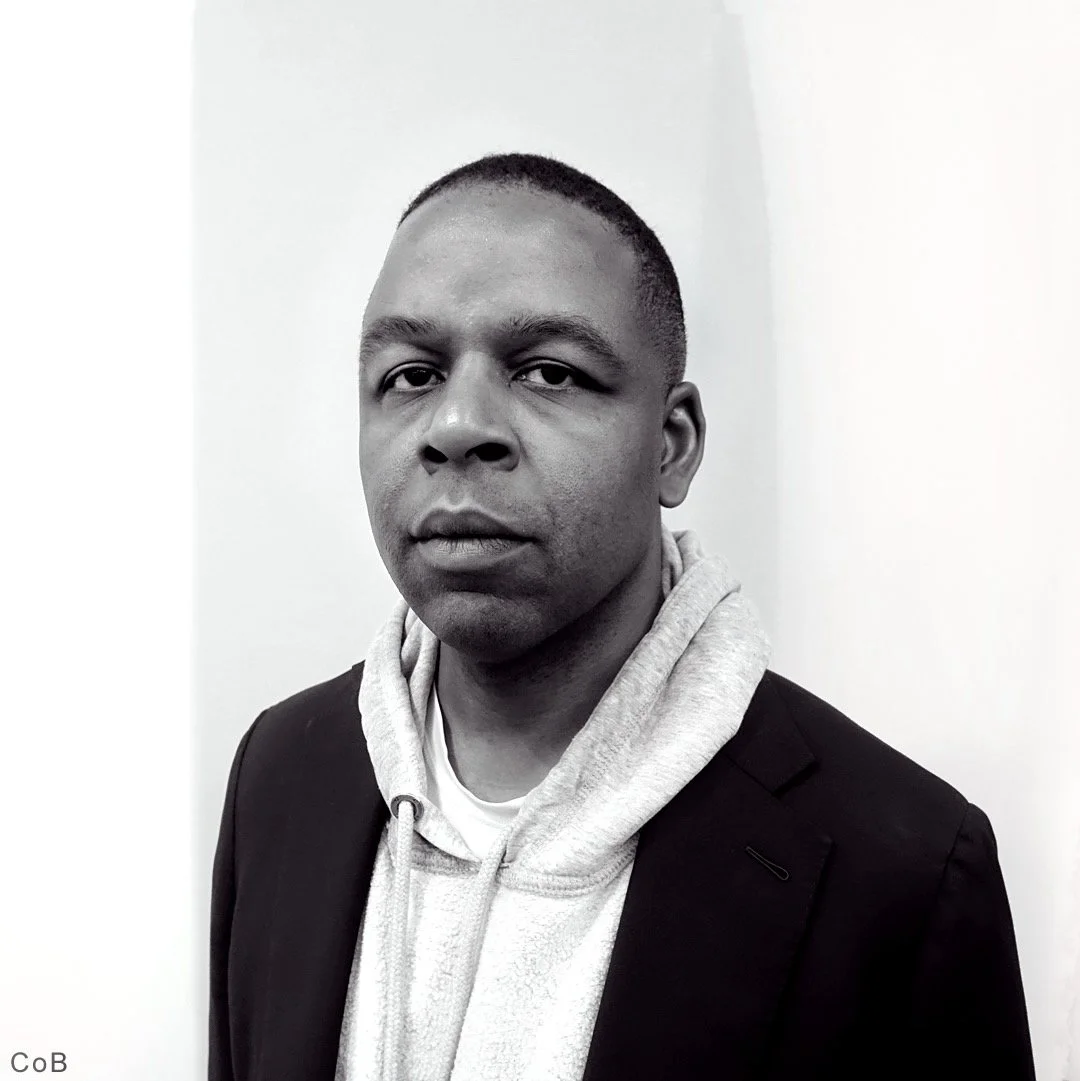
Dr. Charles Moore, Independent Curator, New York City, USA and Berlin, Germany
Could you tell us a little more about your background and how you got into curating?
I grew up in Detroit, where the Detroit Institute of Arts was like a second home to me. The Diego Rivera’s Detroit Industry Murals left a great impression on me—not simply as artworks, but as arguments about labor, and power (in those murals you could always tell who the employer was and the employed). And that fascinated me about this masterpiece.
My path into curating was nonlinear. I first worked in finance, fulfilling an early ambition to work on Wall Street, while also having previously lived in Rome as a student immersed in language, culture, and art history. Collecting contemporary art became my entry point into the ecosystem, followed by writing. What began as criticism evolved into curatorial authorship. My first major exhibition, Operation Varsity Blues (2021), used the college admissions scandal as a framework to think through race and access to an elite education in America through the work of Black artists. Since then, I have approached curating as a form of research and cultural storytelling; often with a foundation of literature or contemporary thought.
Who/what has influenced your curatorial practice?
My practice has been shaped by artists as much as by writers.
Long-form conversations with artists taught me how artists think structurally—how process, doubt, material, memory, and biography converge inside a practice. The art of engagement and dialogue, while archiving discourse is the foundation of my methodology.
I am equally influenced by literature and philosophy. Milan Kundera, Tolstoy, Dostoyevsky, Cornell West, Schopenhauer, and Kieślowski’s Three Colours trilogy have all informed how I think about exhibition-making—not as object arrangement, but as narrative construction.
I am interested in exhibitions that function intellectually and emotionally at the same time...when possible.
The role of the curator is continuously changing. Could you describe what it means to be a curator today?
My work often begins with conversation. I see dialogue as both a research methodology and curatorial medium. In an era of accelerated image consumption, sustained discourse becomes a form of resistance.
What are you currently working on?
One of my most significant ongoing projects is Global Conversations, a long-form publishing and curatorial platform developed with Mousse Publishing. The project emerged from a simple but ambitious question: what might contemporary art history look like if documented through sustained dialogue across national contexts? Rather than producing isolated interviews, the series functions as a form of curatorial field research—mapping ecosystems through conversations with artists, curators, architects, and cultural thinkers. Global Conversations: Mexico was the first volume, followed by Romania, and there are others forthcoming. I see the series as a growing oral history of contemporary art’s global present—one that privileges depth, intellectual exchange, and local specificity over summary.
Alongside the publishing work, I continue curating exhibitions internationally, with recent and upcoming projects in Berlin, Bogota, Bucharest, Mexico City, Milan, New York, Novi Sad, Paris, and beyond.
What are you reading, watching, or listening to now, that is helping you to stay relaxed and positive?
I am usually reading several books simultaneously. At the moment: George Orwell’s Keep the Aspidistra Flying, Ivo Andrić’s The Bridge on the Drina, and Katharina Grosse in Conversation with Klaus Dermutz.
As for film, I return often to Louis Malle’s My Dinner with Andre—perhaps unsurprisingly, as I remain fascinated by conversation as both structure and performance. The dance between Wallace Shawn and André Gregory never gets old to me. It’s only proof that oral history work, when done correctly, will stay fresh.
Musically, my listening moves fluidly between opera, jazz, hip-hop, and classical music depending on the day. Over the past couple of years, I’ve been taking a series of small groups of artists and curators to the Metropolitan Opera in NYC, historically one of my favorite places to visit in the world.
How long have you been part of IKT?
I was admitted as a member May 2026.
Thank you Charles!
Learn more about Charles and his work on his website. Follow Charles on Instagram!
Spotlight
Spotlight is a series of short interviews, aiming to showcase the diverse expertise and innovative approaches of our IKT members. Whether you're seeking inspiration or searching for potential partners, join us on this captivating journey as we uncover the stories, ideas, and creative visions of our members.
Want to participate?
Send us a request to ikt.curatorial@gmail.com and we will send you interview questions.