
Spotlight with Ekaterina Seromakha
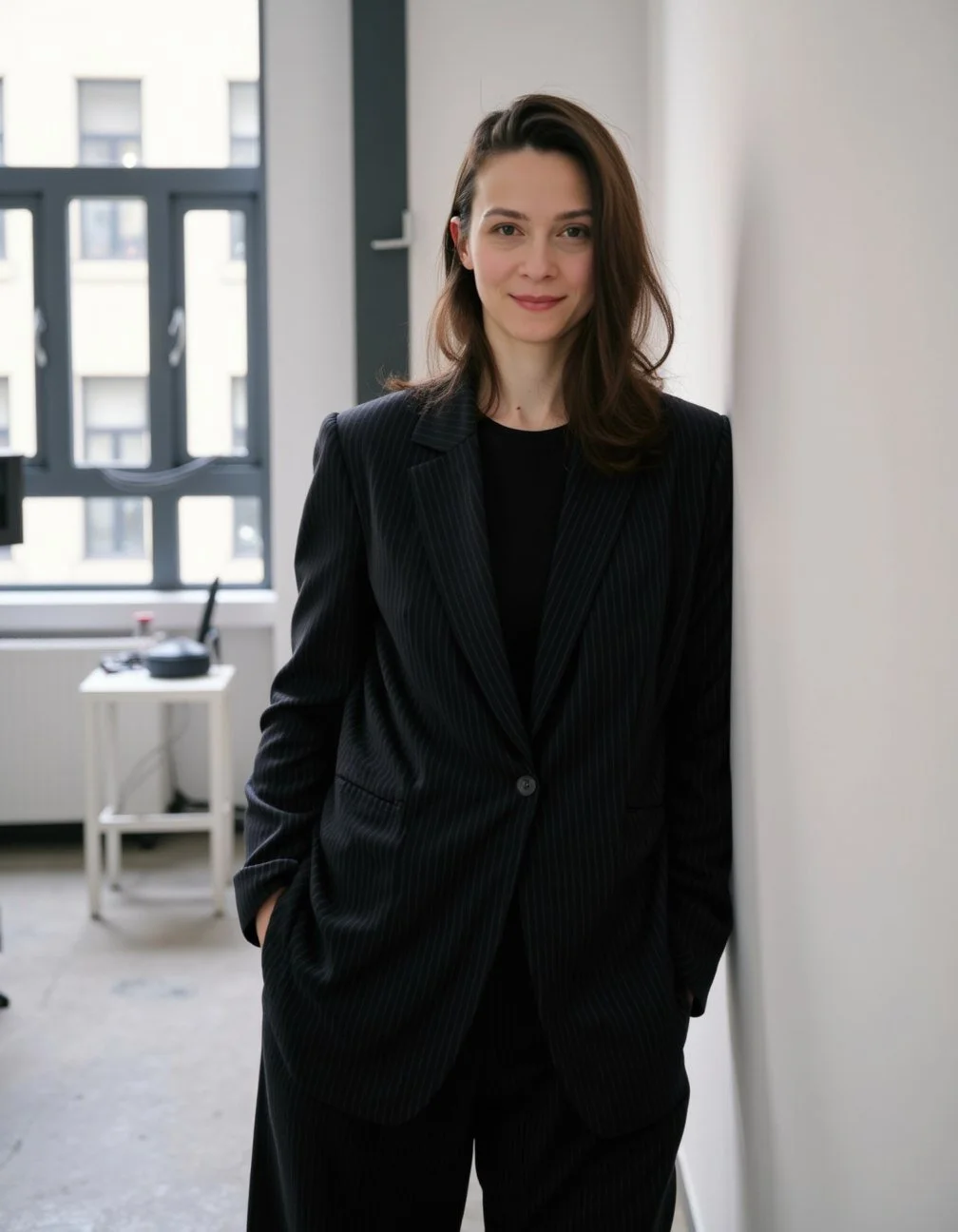
Ekaterina Seromakha, Independent Curator, Moscow, Russia
Could you tell us a little more about your background and how you got into curating?
I am an artist and a psychologist. For a long time, I worked at VNIRO, the Russian Federal Research Institute of Fisheries and Oceanography, where I was involved in organizing events for young scientists, schools, lectures and exhibitions. My experience coordinating over 40 events led me to realize that I was interested not only in creating art, but also in building the context around it.
I came to curating through practice: first, I organized exhibitions for my students and colleagues, and later, interdisciplinary projects at the intersection of science and art. One of the key projects was The Beauty of Science (2023), which we held at the Global Fishery Forum & Seafood Expo Russia. It was a competition for artists to create artworks based on the research of young scientists from VNIRO. The exhibition, lectures and round tables showed how science and art can speak the same language. Project website: www.art-sci-vniro.ru.
My authorial methodology, Archaeology of the Present, the collection and transformation of material traces, such as plastic and found objects, into exhibition statements, has also become a curatorial tool for me.
Who/what has influenced your curatorial practice?
I have been strongly influenced by Philippe Descola’s idea of animism, the recognition of non-human entities, including plastic waste, as having their own subjectivity. I have also been influenced by the methodology of site-specific art and by my experience participating in the release of killer whales in Srednyaya Bay in 2019, which showed me that art can be not only representation, but also action.
Among curators, Maria Kalinina, from the Contemporary Art programme at HSE University, and Elena Kovylina, from the festival Frequencies, have influenced me. They taught me that a good exhibition is not just a beautiful arrangement of objects, but a system of questions that you pose to the viewer.
The role of the curator is continuously changing. Could you describe what it means to be a curator today?
For me today, a curator is neither a “selector” nor a “hanger of works.” They are a context researcher and a mediator between the artist, the viewer, the material and the place. I often work with found objects and waste, and here, curating becomes an act of giving a voice to what is usually silent. The curator decides which “traces” enter the exhibition and which remain behind the scenes. This is a great responsibility, not to the market, but to the memory of the place and the honesty of the statement.
What’s next for you? What are your upcoming projects?
I am currently working on a travelling exhibition, Second Life: Transformation of the Trace, for the Ecosborka Center and Krasnokholmskaya Gallery. It consists of five sections: abstractions made from fused plastic bags, 3D-printed diatom algae made from recycled plastic, fractal panels made from lids and granules, and glowing objects. The exhibition explores the moment when waste ceases to be waste and becomes art.
In parallel, I am launching a nationwide project, Archaeology of the Present, with the political party The Greens: cleanup events in over 10 cities, where the collected plastic is turned into paintings with GPS coordinates and stories of the finds.
What are you reading, watching, or listening to now, that is helping you to stay relaxed and positive?
I love reading Ray Bradbury’s stories. Right now, I am re-reading Fahrenheit 451. I am watching the series Young Sheldon. It is very warm and funny. I listen to field recordings: the sound of the surf, the singing of whales and the wind.
I also follow international environmental art channels, for example, ikonoTV, which builds a bridge between art and climate consciousness. This helps me not to drown in the news and to stay focused on the fact that art can be not only a testimony, but also a healing practice.
How long have you been part of IKT?
I have just become a member of IKT and hope that this will give me the opportunity for cross-cultural interactions, the exchange of exhibitions between Russia and other countries in the field of environmental art, and access to current discussions about the role of the curator in the era of climate crisis. This is a valuable resource for professional development and horizontal connections.
Thank you Ekaterina!
Learn more about Ekaterina and her work: Instagram
Spotlight
The Spotlight series features short interviews with IKT members, offering insight into their work, ideas, and professional contexts. Through these conversations, we highlight the diverse practices, perspectives, and experiences that make up the IKT community, while creating opportunities for members to discover shared interests, find inspiration, and connect with potential collaborators.
Want to participate?
Send us a request to ikt.curatorial@gmail.com and we will send you interview questions.