Spotlight with Mariam Shergelashvili
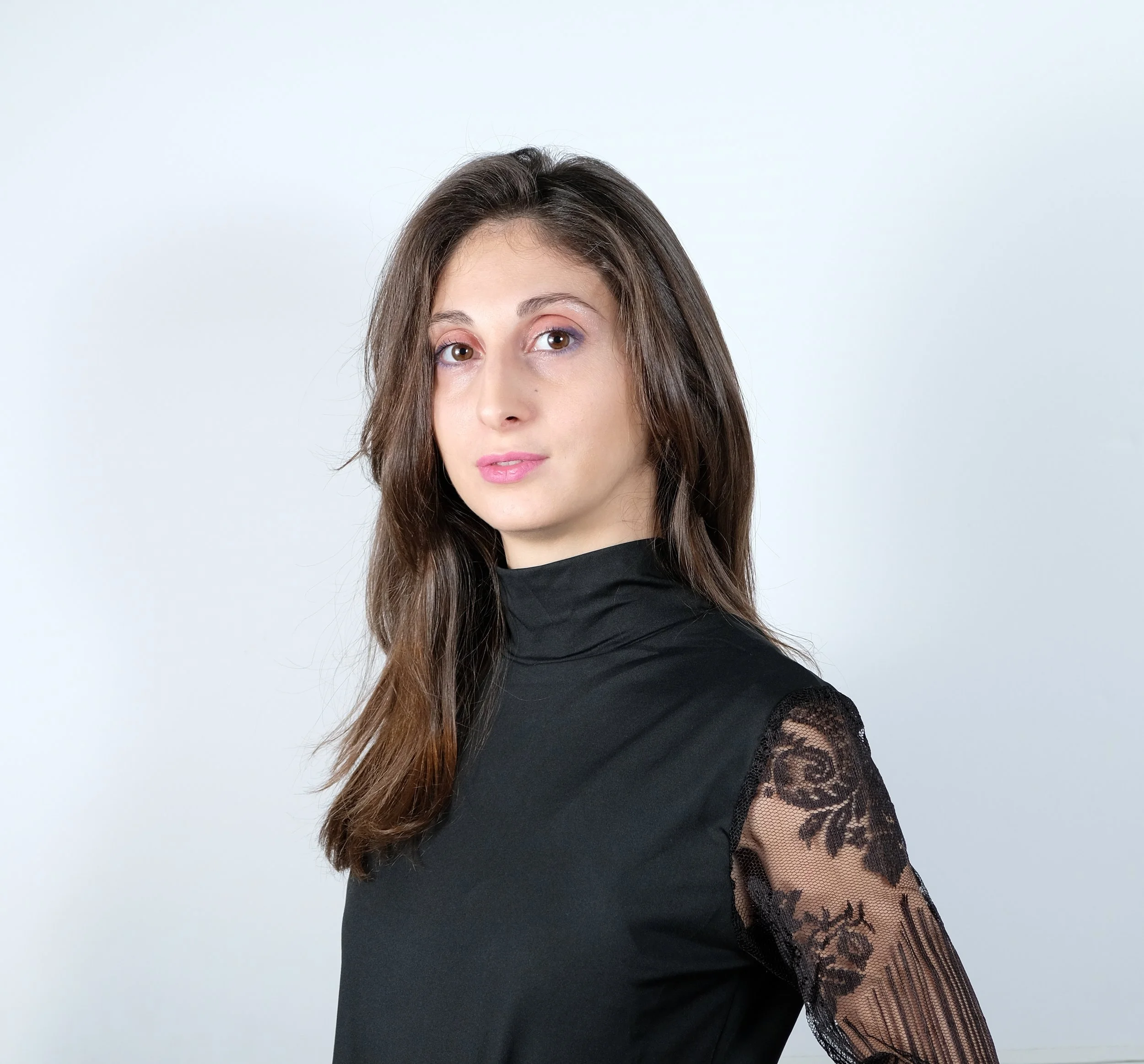
Mariam Shergelashvili, Exhibition curator at the State Silk Museum, Guest curator at AFA (Art Foundation Anagi), Independent researcher and founder of collaborative curatorial platform unarchived_semiotics.
Could you tell us a little more about your background and how you got into curating?
My academic background is in Art History and Theory. During my university studies, I became increasingly interested in contemporary art and its critical frameworks. At the same time, while I was in my second year, I began an internship at the State Silk Museum in Tbilisi. Since then, I have been working at the museum, and since 2017 my position changed as Exhibition Curator.
My interest in curating initially emerged through museum and institutional practice, but I have also developed different informal platforms of collaboration while curating was a main tool for understanding context and creating a space for discursive analysis, engagement, and passion for creative reflection.
Who/what has influenced your curatorial practice?
I’m mostly influenced by creative exchanges with artists, colleagues and creative persons. Observing how ideas develop over time and resonate is most curious for me. Since the beginning of my curatorial practice, I’ve been interested in the relationship between art, historical change, and the social conditions that shape creative practices.
Working in the unique environment of the State Silk Museum has had a profound impact on my curatorial practice. As a museum that brings together history, science, art, and cultural heritage, it has introduced me to a truly multidisciplinary way of thinking. Through collaborations with artists, researchers, scientists, and cultural professionals, I have learned to approach exhibitions and projects from multiple perspectives. It helped me to see exhibitions beyond classical representational formats as spaces where different disciplines, experiences, and perspectives can meet.
I’m particularly interested in the relational models of analysis between historical context and contemporary approaches. Curatorial work, for me, is largely about exchanging ideas, and creating conditions where new connections and interpretations can emerge.
The role of the curator is continuously changing. Could you describe what it means to be a curator today?
I think the role of the curator today extends far beyond organizing exhibitions. For me, curating is a form of mediation that involves care, observation, and creating connections that are not always immediately visible.
I see the curator as a connector, navigating between different fields of knowledge, experiences, and ways of thinking. It often means tracing relationships between art and society, history and the present, individual stories and collective realities.
At the same time, curating is a deeply creative process. It is the ability to approach the world with curiosity, imagination, and attentiveness. Through exhibitions and public programs, curators create atmospheres that invite reflection and open new perspectives. In this sense, curating is about shaping conditions where thoughts, emotions, and creative impulses can connect with both our lived and imagined environments.
Tell us about the latest exhibition / project that you curated.
One of my recent independent curatorial projects was Cartography of Monochrome Feelings, developed through my curatorial platform unarchived_semiotics and presented at Art Foundation Anagi. The exhibition brought together ten Georgian artists from different generations and backgrounds to explore emotional, psychological, and social landscapes through the metaphor of cartography. The project was not about mapping physical territories; instead, it focused on inner states, memories, and subjective experiences, creating connections between diverse artistic practices, especially within more marginal fields of art such as drawing, paper-based works, and textile.
Alongside my independent work, I recently curated and coordinated the State Silk Museum’s International Museum Week program under the concept Back to Nature: Museum Reconnects. This initiative connected the museum’s scientific aspects with contemporary artistic and research-driven approaches through two temporary exhibitions, Chromatics: Plants, Humans and Nature and Observing the Ephemeral: The Renewed Entomology Collection. Through close engagement with the museum’s archives and collections, the program brought together artists, researchers, and visitors in a series of interactive program focused on biodiversity, ecology, and observation.
Looking ahead, I am continuing several institutional and independent projects, including solo exhibitions and research-based curatorial initiatives. My current focus is on textile and the conceptual potential of this medium, exploring how it can be reinterpreted within contemporary art and how it continues to reshape cultural meanings today. This will remain one of the central directions of my work in 2027.
What are you reading, watching, or listening to now, that is helping you to stay relaxed and positive?
I usually read several books at the same time, moving between fiction, research-based literature, and authors I often return to. Recently, I have been re-reading The Testaments by Margaret Atwood. What always stays with me in this novel is its powerful exploration of injustice, resilience, and the difficult search for truth. Through multiple female voices and perspectives, Atwood creates a story that is both unsettling and inspiring, revealing the cruelty of human systems while also affirming the possibility of resistance which is a highly important topic of our unstable world.
I also enjoy reading biographies and memoirs. At the moment, I am reading Confessions of an Art Addict - Peggy Guggenheim. Beyond Peggy’s fascinating bohemian life, the book offers a unique perspective on a period that profoundly shaped the history of modern art and deepens my understanding of the personalities and cultural environments behind major artistic movements.
Music plays an equally important role in my life. It constantly reminds me of the unpredictability of existence and of the emotional sensitivity that connects us to the world around us. A recent book that resonated with me is Music: A Subversive History by Ted Gioia. I was particularly drawn to his idea that music is, in many ways, a history of rebellion. The book explores the voices of outsiders, nonconformists, and visionaries, showing how music has challenged dominant ideologies and shaped both social and spiritual life throughout history. It was an inspiring reminder of the transformative power of culture and creativity.
How long have you been part of IKT?
I have only recently joined IKT, but I was motivated to become part of the network because I believe that international exchange and professional dialogue are more important than ever. For me, IKT offers an opportunity to build new connections, develop collaborations, and participate in initiatives that extend beyond local contexts.
In today's fragile world, I think of cultural networks as creative bridges that help connect people, ideas, and experiences. They create spaces where gaps can be filled with new meanings. I hope that being part of IKT will contribute my own curatorial practice as well as will open possibilities for future collaborations.
Thank you Mariam!
Spotlight
The Spotlight series features short interviews with IKT members, offering insight into their work, ideas, and professional contexts. Through these conversations, we highlight the diverse practices, perspectives, and experiences that make up the IKT community, while creating opportunities for members to discover shared interests, find inspiration, and connect with potential collaborators.
Want to participate?
Send us a request to ikt.curatorial@gmail.com and we will send you interview questions.