
Spotlight with Natalia Fuchs
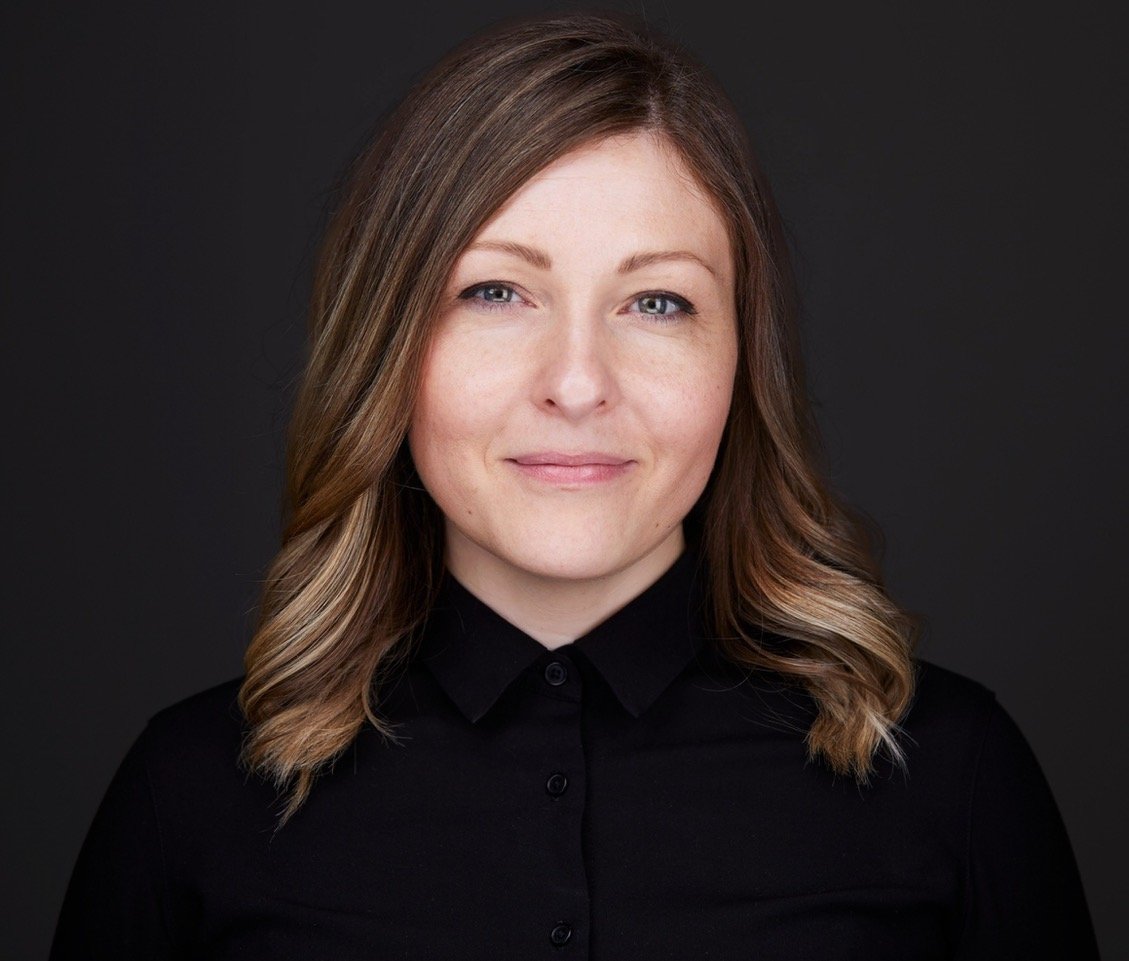
Natalia Fuchs, Founder of ARTYPICAL, Curator, & Cultural Producer
Could you tell us a little more about your background and how you got into curating?
My background is interdisciplinary, which perhaps explains why I now work at the intersection of art, technology, ethics, and psychology.
I started as a curator of digital and media art, drawn to the way technology reshapes our sensory and social realities. Early on, I worked for Vienna Contemporary, Polytechnic Museum and National Centre for Contemporary Arts in Moscow, ZKM Center for Art and Media in Karlsruhe, Barbican in London. Later, I organised independent art projects, such as international AI Art Labs, then moved into larger platforms. A turning point was curating Gamma Festival and collaboration with MUTEK in Montreal, Tokyo and Dubai. In the laboratories I curated I brought together artists, programmers, and ethicists to prototype AI performance works in intensive residency formats.
What I discovered, across my curatorial and artistic practice, was that the most urgent questions were not technical but ethical. What does it mean to trust an AI? How do we build systems that are transparent but not sterile? Where does responsibility lie when an AI fails on stage? Those questions became my PhD research later.
I am now a practice-based PhD candidate at the Ionian University researching how the ethics of care – attentiveness, responsibility, competence, responsiveness, solidarity – can be performed through arts integrating AI. I continue to curate, but now my curatorial practice and research are inseparable.
Alongside this, I trained as a Cognitive Behavioural Therapist (CBT) and maintain my own therapeutic practice. And I lecture in Media Archaeology at different universities. All of this feed back into my curatorial work: clinical attention to human vulnerability, historical depth on human-machine relationships, and a commitment to care as curatorial method.
Who/what has influenced your curatorial practice?
My curatorial practice has been shaped by three primary influences.
First, care ethics – particularly the work of Carol Gilligan and Joan Tronto. Tronto's five qualities of care (attentiveness, responsibility, competence, responsiveness, solidarity) have become my curatorial framework. I no longer ask only aesthetical quality of an artwork, but several other questions: What does this work attend to? Who takes responsibility for it? Is it competent for the relational context? How does it respond to its audience? Does it build solidarity?
Second, media archaeology – the study of forgotten media histories. I lecture in this field, and it has taught me that every new technology carries alternative pasts. When curating AI art, I ask: what histories of human-machine care have been forgotten? The automata of the 18th century, ELIZA in the 1960s, Japanese companion robots of the 1990s – these are not footnotes but ancestors.
Third, my clinical training in CBT. This may seem distant from curating, but it is not. Therapy teaches you to be attentive, to respond to need, to recognise when you have missed the mark and to repair the rupture. I try to bring that same quality of attention to artists, audiences, and the curatorial relationship. I also run special theraupetical skills workshops designed especially for curators and for artists.
Concrete influences include Peter Weibel, with whom I worked as an Art Advisor. His approach taught me that curating is not selecting objects but facilitating relationships.
The role of the curator is continuously changing. Could you describe what it means to be a curator today?
The role of the curator today is, I believe, becoming that of a caregiver. This is not a metaphor. In an era of information overload, algorithmic recommendation, and social fragmentation, the curator's traditional functions – selecting, organising, interpreting – are increasingly automated. AI can generate exhibition texts, recommend artworks, even curate playlists. So, what remains irreducibly human? I say Care. Attentiveness to the specific. Responsibility for the vulnerable. Competence in relational contexts. Responsiveness to unexpected needs. Solidarity with artists and audiences.
For me, being a curator today means facilitating conditions for care to emerge. This involves practical things: clear contracts, fair payment, transparent communication, accessible spaces. It also involves ethical things: asking not only if this work is legal, but if this work is caring.
My PhD research formalises this. I am developing a care-centred framework for curatorial practice, drawing on Tronto's five qualities. And it is, I believe, what curating must become: a practice of caring for artists, audiences, and the relationships between them. That is my curatorial position.
What’s next for you? What are your upcoming projects?
What's next is the next phase of my PhD research, which is also my curatorial practice. I am currently designing a series of AI Art Labs across several countries. Each laboratory brings together artists, technologists, and ethicists for intensive prototyping of interactive AI performance works. But the distinctive feature is the ethical framework.
Alongside the laboratories, I am developing a new interactive performance work integrating AI as an artist myself and looking for venues and partners to present this work in 2027-2028.
And finally, I am building the bridge to postdoctoral research extended into mental health.
So, what's next is laboratories, a new performance, and a postdoctoral vision – all grounded in care.
What are you reading, watching, or listening to now, that is helping you to stay relaxed and positive?
Currently I am rereading Joan Tronto's books – but slowly, a few pages a day, not for research but for grounding. Her definition of care as «everything we do to maintain, continue, and repair our world» is my anchor. I also read poetry.
I watch very little entertaining content, because my screen time is already high. Instead, I watch out of my window or balcony. This is not a joke. I have a view, so observing outer world complete presence, its lack of urgency, its capacity for rest – this is a form of meditation. I recommend it.
I listen to classics, jazz and field recordings. Not music, not podcasts, but environmental sound – rain, forest, city ambience. It is beautiful.
How long have you been part of IKT and how do you feel that it has benefited your curatorial practice?
I have been a member of IKT for several years up to now. The association is a vital network, particularly as my practice has become more research-oriented.
The primary benefit has been connection to curators worldwide. IKT's international scope has been always invaluable. Curating can be isolating, especially when working across time zones and languages. IKT is a reminder that we are a community – that our work of caring for artists, audiences, and each other is shared.
Thank you Natalia!
Learn more about Natalia and her work on her website. Follow Natalia on Instagram / Facebook
Spotlight
Spotlight is a series of short interviews, aiming to showcase the diverse expertise and innovative approaches of our IKT members. Whether you're seeking inspiration or searching for potential partners, join us on this captivating journey as we uncover the stories, ideas, and creative visions of our members.
Want to participate?
Send us a request to ikt.curatorial@gmail.com and we will send you interview questions.